Elville and Associates

Blog / News

The Difference Between Alzheimer’s and Dementia

Jill Rosner, R.N., B.S.N. – Guest Contributor – Rosner Healthcare Navigation

Most of my articles come from my experiences in my daily life as an Aging Life Care Manager.  All of the topics are meant to educate my readers and bring awareness to issues related to health and aging.  Many of my clients are living with some form of dementia. The take-home message that I want everyone to know is that dementia does not come with a list of manifestations that do or will happen to everyone affected.  There is no cookie cutter Alzheimer’s disease or form of dementia.

The most frequently asked question in which I encounter from my client’s family members tends to be: “What is the difference between Alzheimer’s disease and dementia?”

The terms have become almost interchangeable over the years. The reason perhaps is because Alzheimer’s disease accounts for the largest percentage of diseases causing the symptoms, which are referred to as dementia.  Dementia itself is not a disease process; instead dementia is a group of symptoms caused by a disease.

It is perhaps easiest to think in terms of diseases that cause symptoms that have other consequences to the rest of the body.  For example, diabetes, which causes high blood sugar and the effects of having a high blood sugar.  The symptom of high blood sugar and the consequences that accompany diabetes is a result of an unhealthy pancreas, which is not functioning properly.  The pancreas either does not produce insulin or produces too little or is resistant to insulin, depending on what kind of diabetes is diagnosed.  So, the high blood sugar and other symptoms is not the disease itself but rather the result of an unhealthy pancreas or a disease affecting the pancreas.

The same holds true for dementia.  Dementia is not the disease but rather the symptoms caused by an unhealthy brain or neurologic disease affecting the brain.

Alzheimer’s disease

While Alzheimer’s disease has most often been considered to be the culprit of these symptoms, there are many other forms of diseases affecting the brain causing dementia symptoms. Vascular disease, high blood pressure, stroke or transient ischemic attacks (TIAs) can lead to damage in the blood vessels in the brain, which can lead to a condition called vascular dementia.  A condition, which causes formation of what is called Lewy bodies in the brain, which, causes a disruptive in the brain’s functioning, and is referred to Lewy Body Dementia.  Frontal temporal dementia affects the frontal and temporal lobes of the brain, and results in symptoms of dementia.  These are just the top of the list of causes of the symptoms of dementia.  Various other forms of dementia exist.

The most important piece to remember is that all types of brain diseases that cause dementia symptoms may have different manifestations or different symptoms.  This has been an increasingly important issue.  It’s no longer your great-grandmother’s dementia.  Once referred to as senility, the symptoms we think of are those of the very “old” person who has lost their memory and shuffles about – perhaps wandering and eating too many sweets – are the easiest to diagnose. However, the less common symptoms or behaviors are becoming more of a problem in the diagnosis of dementia.

I am seeing more and more patients affected by dementia at a younger age and more and more patients affected by symptoms that are not typical and may be less obvious signs.  I have seen patients dismissed and assured that they are just fine because they don’t fit the old, outdated mold.  I recently had a nurse say to me “she is too young to have dementia” when my client clearly had been diagnosed and had severe symptoms of dementia.  Even modern medicine and practice has not caught up to the realities of the epidemic of brain dysfunction that is causing myriad of symptoms.

The most disturbing lack of insight comes from the lack of knowledge that memory loss does not have to have the primary symptom of dementia.  Too may people are being misdiagnosed or not diagnosed at all because they are able to answer the typical type of questions such as “What’s your name?  What’s the date?  Who is the president?” and a few others.  Amnesia or memory loss is just one symptom, and for some forms of dementia, memory loss is not the prominent feature!

In the case where the frontal lobe of the brain has been more severely affected by frontal-temporal dementia, shrinking of the brain or injury of some sort in the case of vascular dementia, the symptoms may be very different from that of Alzheimer’s disease – where the memory is primarily affected.

The frontal lobe affects behaviors such as impulse control, the filter between the thoughts and the spoken word.  For example, some behaviors include: blurting out inappropriate language or taboo thoughts and executive functioning.  The ability to sequence and organize is affected.  Insight and judgment are affected.  This sets the stage for exploitation and poor decision-making.  Paranoia and delusions can be features of dementia.

More and more I see clients who don’t have the typical memory loss, and therefore are not being recognized as having a cognitive impairment or dementia.  These unfortunate people are making terrible decisions, are being financially exploited and are often taken advantage of during everyday life.  They are often subject of undue influence where they are easily manipulated into complying with the wishes of another, without understanding the consequences of their actions and acting of their own free will because their judgment is affected. This different or unusual manifestation of dementia often leads to the misdiagnosis and misunderstanding of dementia.

The main messages again is this:  Do not assume that all forms of dementia produce the same symptoms or have the same consequences.  Just because one’s memory seems to be fairly good does not mean that the person is not impaired.  Do not make assumptions! It’s a new and ever evolving world of dementia.  If you recognize that something is just “not right” with your loved one, friend or co-worker, I encourage you to tell their doctor, discuss your observations with others who have contact with the affected person, and advocate for intervention.  You could be saving that person from being taken advantage of or being overlooked as having a problem. Far too often the problem is not addressed until way too late in the course of the disease process.

For more information contact the Alzheimer’s Association at www.alz.org.

Jill Rosner is a registered nurse, certified geriatric care manager and owner of Rosner Healthcare Navigation.  She provides patient advocacy and care management services to clients with health and aging issues.  Contact her at JillRosnerRN@aol.com

Posted in:

Related Posts

Elville and Associates Announces Practice Group Leadership Promotion

At Elville and Associates, delivering consistent, high-quality service to our clients depends on strong leadership and coordination behind the scenes. We are proud to announce that Vonda Dubard has been promoted to Practice Group Manager at Elville and Associates. In this role, Vonda helps lead and coordinate the firm’s core practice groups—ensuring attorneys and staff work seamlessly together, workflows are efficient, and every client receives thoughtful, organized estate planning and elder law services. Practice groups play a critical role in supporting complex planning, maintaining quality standards, and guiding matters smoothly from start to finish. Vonda’s deep knowledge of the firm, steady leadership, and commitment to exceptional client service make her exceptionally well suited for this position. Her promotion reflects both her professional skill and the trust she has earned from colleagues and clients alike. Please join us in congratulating Vonda on this well-deserved achievement!

Elville and Associates’ Managing Principal Stephen R. Elville and Principal Attorneys Shannon Goodwin and Shannon Ladner Named to 2025 Maryland Super Lawyers and Rising Stars List, Respectively

Authored by:  Jeffrey D. Stauffer – Community Relations Director Stephen Elville, Managing Principal and Lead Attorney of Elville and Associates, P.C., has been selected to the 2025 Maryland Super Lawyers List. Each year, no more than five percent of the lawyers in the state are selected by the research team at Super Lawyers to receive this honor.  This is Mr. Elville’s 10th year being named to the Maryland Super Lawyers List and ninth consecutive year as well. Mr. Elville works with individuals and families to provide a unique attorney-client experience and peace of mind solutions to the challenges they face with estate planning, elder law, special needs planning, asset protection, tax planning matters, and more.  Mr. Elville has extensive experience in working with clients involved in crisis situations, and also brings a unique and personalized approach to pre-crisis planning.  Along with his work in the aforementioned areas, Mr. Elville’s maintains a focus in the areas of asset protection, tax planning, and disability and long-term care planning as well.  He is widely regarded as one of the preeminent attorneys in the State of Maryland and beyond for his legal-technical knowledge and ability to navigate many different types of legal matters for clients.  He is a seasoned speaker and educator, and each year presents by way of dozens of webinars, workshops for businesses and their employees, conferences, and continuing education events. Mr. Elville is currently a member of the National Association of Elder Law Attorneys (NAELA), Elder Counsel, Wealth Counsel, the Academy of Special Needs Planners, and the National Network of Estate Planning Attorneys.  He is the past Chair of the Howard County Bar Association Estates & Trusts and Elder Law Sections and is the past President of the Coalition of Geriatric Services (COGS). Mr. Elville has also served as Chair of the Elder Law and Disability Rights Section Council of the Maryland State Bar Association and was the longtime Chair for Law Day Maryland. Recently, Mr. Elville served as the Chair of the Pro Bono Subcommittee of the Elder Law Disability Rights Section Council.  He is also the President of the Friends of Baltimore Classical Music, Inc., and is the Founder of the Elville Center for the Creative Arts, Inc., a non-profit organization developed in 2014 that works to further music education in schools and other organizations that have student musicians with limited means. Shannon Goodwin, a Principal Attorney with Elville and Associates, was named to the Rising Stars List for a second consecutive year in 2025.  She is the Leader of the firm’s busy Estate and Trust Administration Department, and has quickly shown the scope and depth of her talents and abilities in the complex world of estates and trusts.  Through her guidance, she partners with clients as they address the sometimes challenging matters of the administration of loved ones’ estates from start to finish, including helping navigate the probate process, inventory and reportings, accountings, and much more. After her undergraduate work at North Carolina State University, Ms. Goodwin participated in multiple internships and externships and went on to distinguish herself as a member of the Syracuse Law Review. Upon graduating from law school, Shannon gained valuable experience by working as a Judicial Law Clerk for three years in the Circuit Court for Washington County, as well as in the District Court for both Washington and Frederick Counties. Shannon then transitioned to private practice and joined Elville and Associates in 2021. Shannon Ladner, also a Principal Attorney with Elville and Associates, was named to the Rising Stars List for a third consecutive year in 2025.  She is an integral member and Leader of the firm’s Estate Planning Department.  She educates and counsels clients through the entire estate planning process – beginning with the initial consultation, followed by the design and implementation of their plans, as well as the necessary maintenance and updating of their planning as changes occur in the laws and their lives.  Ms. Ladner’s practice focus includes estate planning, elder law, special needs planning, and tax planning. During law school, Ms. Ladner participated in the Human Trafficking Prevention Project Clinic where she diligently represented victims of human trafficking as a Rule 19 Student Attorney. Upon obtaining her Juris Doctor, Ms. Ladner gained valuable experience by working as a Judicial Law Clerk for Magistrates Susan M. Marzetta and Lori Joy Eisner in the Circuit Court for Baltimore City. Prior to bringing her skills to Elville and Associates, Ms. Ladner worked as an Associate Attorney at a small law firm in Towson, Maryland where she represented clients in Family Law and Criminal Law matters. To learn more about this year’s honorees and the entire team at Elville and Associates, please click here.  To learn more about Elville and Associates, its practice areas, its commitment to client education, and events calendar, please visit www.elvilleassociates.com. Super Lawyers, a Thomson Reuters business, is a rating service of outstanding lawyers from more than 70 practice areas who have attained a high degree of peer recognition and professional achievement. The annual selections are made using a patented multiphase process that includes a statewide survey of lawyers, an independent research evaluation of candidates and peer reviews by practice area. The result is a credible, comprehensive and diverse listing of exceptional attorneys. The Super Lawyers lists are published nationwide in Super Lawyers Magazines and in leading city and regional magazines and newspapers across the country. Super Lawyers Magazines also feature editorial profiles of attorneys who embody excellence in the practice of law. For more information about Super Lawyers, visit SuperLawyers.com. #elvilleeducation

Elville and Associates Montgomery County Rockville

Elville and Associates, P.C. Opens New Montgomery County Office in Rockville

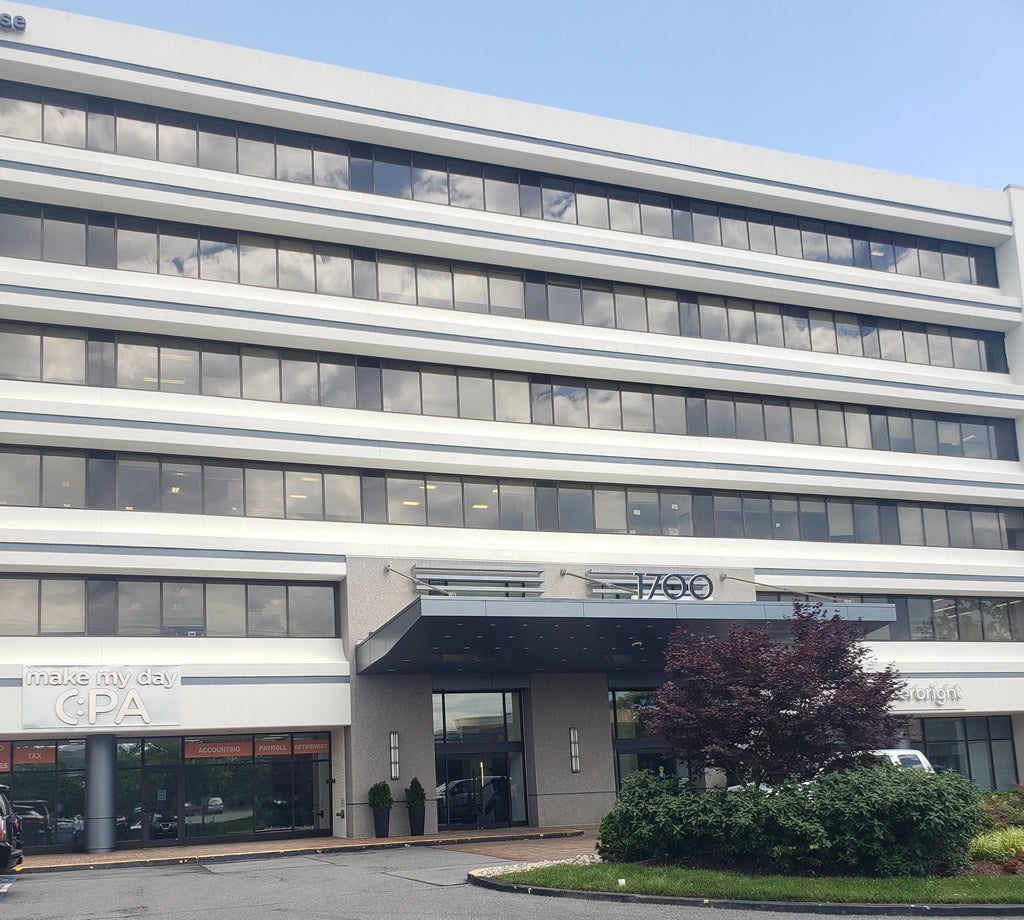
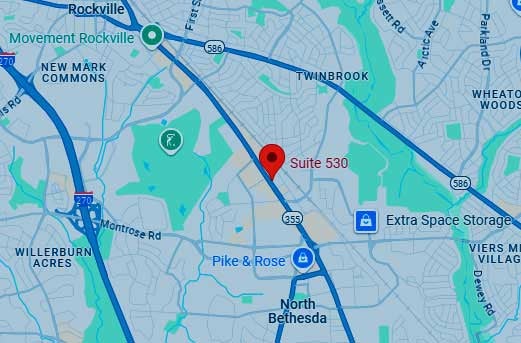
Authored by: Stephen Elville – Managing Principal and Lead Attorney – Elville and Associates, P.C. After nearly 25 years of serving residents of Montgomery County at its former Rockville and Pike and Rose locations, I’m proud to announce the opening of Elville and Associates’ new permanent Montgomery County office at 1700 Rockville Pike, Suite 530, Rockville - serving Rockville, Bethesda, Potomac, Gaithersburg, and all of Montgomery County. Montgomery County is a dynamic setting for business and government, and a diverse population with continuous and growing needs for comprehensive and contemporary estate and other related planning. Montgomery County remains largely underserved in Elder Law, now a burgeoning area of law affecting nearly all individuals and families. Elville and Associates is both proud and privileged to serve this great community and County, and to be a Member of the Bar Association of Montgomery County. If you are a community leader, nonprofit organizer, financial advisor, CPA, insurance professional, Aging LifeCare Manager, firefighter or police officer, or other collaborative professional; or, if you know someone who is in need of client care-focused, education-based estate planning, elder law planning, special needs planning, or business related planning, we invite you to contact us. We look forward to meeting you as Elville and Associates continues to serve those who make Montgomery County great. You can reach me, Stephen R. Elville, J.D., LL.M., at 443-393-7696 x108, or at steve@elvilleassociates.com. You can also reach Lillian Hummel, our Principal Attorney at the new Montgomery County office, at 240-583-7990 x201, or at Lilly@elvilleassociates.com. Or, send us a general message here. Elville and Associates, P.C. - Planning for Life, Planning for Legacies. What’s your Plan? What’s your Legacy?