Elville and Associates

Blog / elville and associates

Blog

All elville and associates Blog Videos & Webinar Recordings News Estate Planning estate financial power of attorney financial planning Special Needs elder law Probate Wills and Trusts attorney beneficiary Elville estate plan maryland Spotlight The Secure Act trusts Client Care Program digital assets estate planning attorney family financial planners guardianship guardianships Healthcare income tax inheritance power of attorney public benefits special needs planning Tax Planning trust Webinar will 401(k)s Access to Music advance medical directive advance medical directives Aid & Attendance Attorney-Client Relationship Augmented Estate Legislation baltimore Beneficiaries Beneficiary Designations Business Planning business succession capital gain Caregivers Charles A. Borek Consultations Coronavirus (COVID-19) Creative Arts Early Withdrawal Penalty for IRAs Education Elder Abuse elder care Elective Share Elville Center Elville Center for the Creative Arts Estate and Trust Administration estate litigation Estate Planning Work Estate Taxes Exceptions Governor Hogan guardian guardianship of the person Harbour School HealthCare Directives Important Document in terrorem clause incapacity planning including the location J.D. James M. Dore Justin M. Ginsburg Legal Services letter of wishes Lindsay V.R. Moss MIDEO® Music MVLS National Health Crisis National Healthcare Decisions Day nationwide health crisis New Elective Share Law non-probate assets Olivia Holcombe Volke Olivia R. Holcombe-Volke Other Qualified Plans Parkinson's Disease Planning planning attorney powers of attorney Pro Bono probate assets Proper Beneficiary Designations Remote Notarization of Documents Retired Parent Retirement Accounts Retirement Plan Assets revision revocable living trust Schools Secure Act social security administration Social Security Benefit Regulations social security disability insurance social security, special needs trust spendthrift clause spendthrift clauses spendthrift trust ssi Super Lawyers supplemental security income survivorship tax testator the business monthly The Elville Center for the Creative Arts The Memorandum of Intent The Trust Purpose Statement Trust Funds Trust Protector Trust Protectors updating of your will VA Aid Verena veterans administration Waypoint Trust Group Workshop

What Happens If I Die Without a Will According to Maryland’s Intestate Laws?

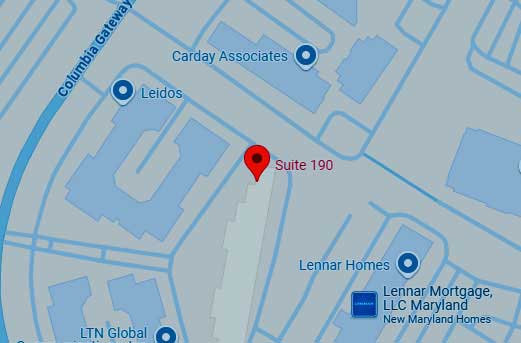
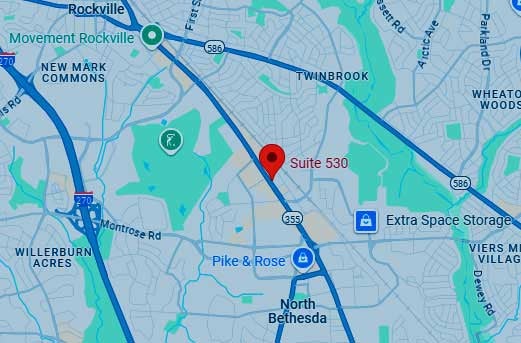
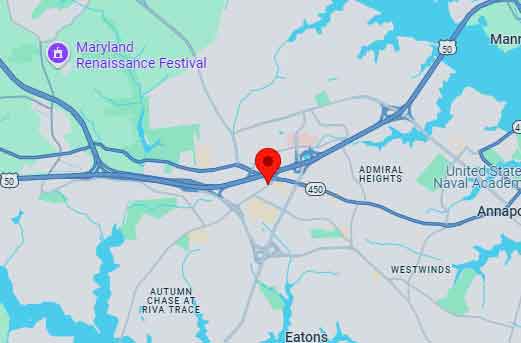
If you do not have a will, then the laws of Maryland kick in to determine what to do with your assets after your death. Dying without a will is known as dying "intestate," and this is never recommended. Proper will planning with a Rockville, MD estate attorney ensures that your loved ones have the smoothest possible experience after your death and that everything is done according to your wishes. Maryland Intestacy Laws Maryland intestacy laws are quite rigid. The courts are required to follow the rules laid down in the law regardless of a family's unique situation. How your assets are distributed will depend on whether you are married or not and whether you have children or not. If you have living parents, they could also be involved. Married With Children If your children are underage, then your spouse gets half of your assets, and the other half is distributed to your children. If your children are adults, then the process depends on whether the children are also the children of your surviving spouse. If they are not, then your spouse receives the first $100,000 of your estate plus half of the remaining property that goes through probate. The other half is distributed to the children. If the children are also the children of your surviving spouse, then your entire estate goes to your spouse on the assumption that, when your spouse passes, the estate will then be divided equally amongst your children. There is no mechanism in intestacy law for any of your children to receive a lesser or greater portion of your estate. Married But No Children If you do not have any children, then your spouse gets 100% of your probated property. Your parents and siblings would not get anything in this situation, and neither would any stepchildren or foster children, unless you have officially adopted them. Legally adopted children are no different from birth children in the eyes of the law. If you do not have any children, then your spouse gets 100% of your probated property. Your parents and siblings would not get anything in this situation, and neither would any stepchildren or foster children, unless you have officially adopted them. Legally adopted children are no different from birth children in the eyes of the law. If you do not have any children, then your spouse gets 100% of your probated property. Your parents and siblings would not get anything in this situation, and neither would any stepchildren or foster children, unless you have officially adopted them. Legally adopted children are no different from birth children in the eyes of the law. If you do not have any children, then your spouse gets 100% of your probated property. Your parents and siblings would not get anything in this situation, and neither would any stepchildren or foster children, unless you have officially adopted them. Legally adopted children are no different from birth children in the eyes of the law. Not Married and No Children If you are not married and have no children, then your assets are given out to your closest relatives. Your parents would have the first right to your estate in this situation, and your siblings come next if your parents have already passed away. If there are no living parents and no living siblings, then grandparents, aunts and uncles, nieces and nephews, and cousins all stand to inherit your property, depending on the precise situation. The Benefits of Will Planning With a Rockville, MD Attorney When you plan out your will with an attorney, you have the opportunity to determine exactly how you want your assets to be distributed. This can be very important if you have, for example, one child that you know stands in need of more assets than the others. Another benefit to planning your will is that you can adjust your estate in such a way that much of it can avoid probate completely. This simplifies the process enormously for your family as well as ensuring that everything goes exactly where you want it to upon your death. Your assets belong to you and should be distributed according to your will, not the will of the state of Maryland. Contact us at Elville and Associates in Columbia, Rockville, or Annapolis, MD today to ensure your wishes are followed.


Is a Living Trust Preferable to a Will for Avoiding Probate?

Probate can be a time-consuming process, but there are ways to legally avoid it. In Rockville, MD, one solution is to hire an estate attorney to set up a living trust. This can make it easier to distribute assets and prevent the delays that are common with probate. A living trust is a way of arranging assets that can be put in place before you die. There are two different types of living trusts: revocable and irrevocable. The former allows you to retain control during your lifetime and can be canceled. An irrevocable living trust cannot be canceled, and all control of the assets is handed to the trust. Many individuals prefer the flexibility of a revocable living trust as it's much simpler to manage. Although it's possible to add to an irrevocable trust, the options are more limited and some transactions may require court approval. A revocable living trust allows the arrangements to be altered by a lawyer in response to changing living circumstances without any difficulty. What Are the Benefits of a Living Trust? The main benefit of a living trust is that it removes the named assets from the probate process. With a revocable living trust, it's possible to retain full control during your lifetime while also appointing trustees to manage the assets after your death. It also has the potential to minimize estate taxes by strategically distributing assets to take full advantage of exemptions. If you become incapacitated, the named trustees can use the trust to manage your affairs without needing to go to court. This is an additional benefit that provides peace of mind. How Does a Living Trust Differ from a Will? A will can also be used to distribute assets after death, but it is not automatically exempt from probate. This means there may be delays in distributing the estate. It is not possible to use a will to manage assets prior to death, even in the event of incapacity. This doesn't mean that a will has no value. Many individuals set up a "pour-over will" which works in tandem with the trust. Although the assets aren't exempt from probate, they can be added to the living trust for easy management and distribution. This can be helpful to scoop up any assets that were inadvertently missed from the trust. Seek Advice From an Experienced Estate Attorney The legalities around using a living trust and will for maximum benefit can be complex, so it's essential to seek professional advice. A skilled lawyer can help you structure your finances in a way that avoids probate and makes use of all available allowances. It's advisable to review the arrangements with a lawyer regularly to ensure any changes are incorporated into the arrangements. We deliver customized estate planning and are proud to serve clients in Central Maryland, the Eastern Shore, and the Washington Metro area. Contact Elville & Associates in Columbia, MD for professional advice you can trust. We also have offices in Rockville, MD and Annapolis, MD for convenient appointments.

Elville and Associates and the Institute on HealthCare Directives Partner to Offer MIDEO® to Firm’s Clients

By:  Jeffrey D. Stauffer -- Community Relations Director -- jeff@elvilleassociates.com, 443-393-7696, @elvilleassoc Columbia, MD – In the first-of-its-kind partnership in the country, Elville and Associates, P.C., an estate planning, elder law, and special needs planning law firm based in Columbia, Maryland, and the Institute on Healthcare Directives have partnered to offer MIDEO ® (My Informed Decision On VidEO) to the firm’s Client Care Program members.  The MIDEO ® card is a personalized card with individuals’ critical healthcare information on the front that also hosts by video, accessible by a QR code scan, their prerecorded wishes for resuscitation and other healthcare choices.  By providing an accurate, up-to-date, easy to review video of the individual speaking, their personal MIDEO ® will accurately allow their wishes and choices to be carried out correctly by medical professionals. “Elville and Associates is privileged to partner with Dr. Ferdinando Mirarchi and MIDEO ® to provide our Client Care Program members with the leading-edge technical tools they need to stay ahead of the curve in healthcare decision-making,” remarked Stephen R. Elville, principal and lead attorney of Elville and Associates.  “Clients are assured and gratified to know they can implement advanced measures, remain proactive in making their health-related wishes known, and protect themselves to the greatest extent possible in an uncertain world.” Some of the benefits of MIDEO ® are: ü MIDEO ® prevents medical errors related to medical strangers misinterpreting your documents ü MIDEO ® ensures the right care at the right time ü MIDEO ® is personalized and individualized for you ü MIDEO ® is easy to complete and Dr. Mirarchi will guide you through every step ü MIDEO ® protects your family from having to make difficult, uninformed decisions that may cause family disruption ü MIDEO ® is protection for you and your family that is retrievable anywhere in the country and internationally The Institute on Healthcare Directives and MIDEO ® are spearheaded by Dr. Ferdinando Mirarchi, Chief Medical & Scientific Officer of the Institute on HealthCare Directives and the Founder of MIDEO ®.  From institutehcd.com, he is “the Principal Investigator of the TRIAD (The Realistic Interpretation of Advance Directives) Research Series which has been featured by the New York Times & Wall Street Journal. His research reveals there is a new Nationwide patient safety risk affecting patients who have living wills, Physicians Orders for Life-Sustaining Treatment orders and those who are critically ill.  His TRIAD VIII study, released by the Journal of Patient Safety, is groundbreaking and reveals patient treatment is much more effective if video testimony is incorporated into their advance care plans.  Dr. Mirarchi is also a practicing Emergency Medicine Physician and Medical Director of the Department of Emergency Medicine at UPMC-Hamot in Erie PA.” At Elville and Associates, it has and always will be the firm’s mission to offer the very best legal-technical knowledge and service to our clients and communities we serve.  We trust this added benefit will prove valuable to our clients and advisor community with whom we partner as a benefit to their clients. To learn more about MIDEO ® and the Institute on Healthcare Directives or to set an appointment, please visit MIDEOcard.com and institutehcd.com.  For more information about Elville and Associates, please visit elvilleassociates.com.

Which Estate Planning Process Is Right for You? The Answer Lies Within Your Goals …

Authored by: Stephen R. Elville, Esq. -- Elville and Associates, P.C. -- 443-393-7696, steve@elvilleassociates.com, @elvilleassoc Many people 65 years of age and over are subconsciously aware of the vulnerability of their assets, including retirement plan assets (IRAs, 401(k)s, 403(b)s, and other Qualified Plans) to Medicaid (long-term care) spend down and dissipation. This awareness carries over into the estate planning process, ultimately leading to the question(s): do I engage in "regular" conventional estate planning without consideration of lifetime long-term care asset protection considerations; or do I engage in a long-term care asset protection strategy that incorporates my overall dispositive plan; or a combination of both? For the majority of people, if these questions are not addressed during the estate planning process, the planning may be one-dimensional and opportunities could be missed. Who can afford that? To steer clear of this danger, all planning should be goal driven. With client goals being identified up front, the planning outcome should be a foregone conclusion and the opportunity to "hit two or three birds with one stone" will not be lost. To discuss If you would like to know more about the estate planning options for your family or you, or simply have your existing estate planning documents reviewed, please contact me at the following: steve@elvilleassociates.com; or mary@elvilleassociates.com; or via telephone at 443-393-7696.

The 2010 Maryland Power of Attorney Act – A Gamechanger

Authored by:  Stephen R. Elville, Esq. – Elville and Associates, P.C. – 443-393-7696, steve@elvilleassociates.com, @elvilleassoc In 2010 the Maryland Power of Attorney Act changed the law, and changed the way we think about powers of attorney in Maryland.  This game-changing law sets forth accountability standards for agents to their principals and provides that powers of attorney are enforceable.  It’s important to be educated about powers of attorney and to understand what you have.  If you’re not quite sure about your existing powers of attorney or don’t have a power of attorney at all, help is available.  Don’t hesitate to contact me at our Columbia office at 443-393-7696, or email me at steve@elvilleassociates.com.  #elvilleeducation

The Most Important Document in Estate Planning – The Financial Power of Attorney

Authored by: Stephen R. Elville, Esq. – Elville and Associates, P.C. – 443-393-7696, steve@elvilleassociates.com, @elvilleassoc A properly drafted financial power of attorney is arguably the most important document in estate planning. How old is yours and when was the last time it was updated? Why take risks when it is so easy to put a financial power of attorney in place? If you are interested in learning about how to update your power(s) of attorney or other estate planning tools, please contact Stephen R. Elville, J.D., L.LM. at 443-393-7696, or via email to steve@elvilleassociates.com; jeff@elvilleassociates.com, or mary@elvilleassociates.com. #elvilleeducation

The Secure Act and Its Potential Income Tax Effect on Clients’ Estate Planning – Seven Important Opportunities

Authored by: Stephen R. Elville, Esq. -- Elville and Associates, P.C. -- 443-393-7696, steve@elvilleassociates.com An unprecedented situation is underway - the Secure Act may impact estate planning in a significant way - in particular, estate planning for retirement plan assets. The Secure Act (House of Representatives’ version – the 10-year plan) recently passed through the House by way of a 471-3 vote. The Senate is proposing a 5-year plan. Although it is unclear which plan will go forward, it is anticipated that one of the two plans will pass in both the House and the Senate and be signed into law by President Trump in August (2019). If this comes to pass, the new law would go into effect for decedents dying after December 31, 2019 (effective in 2020). Why is the Secure Act important and what should you know? The Secure Act will directly impact the length of time IRAs and Qualified Plans can defer income tax and be stretched. Unlike the current law allowing inherited IRAs to be stretched out in accordance with IRS life expectancy rules, the Secure Act would limit the stretch out of IRAs to either 5 or 10 years, with some exceptions. The Act also applies to Roth IRAs. The Secure Act is potentially terrible for some people, especially those who will have their estate plans disrupted and lifelong plans to leave children, grandchildren, nieces and nephews, or others retirement plan assets over the beneficiary’s individual life expectancies thwarted. Fortunately, there are several strategies to deal with the potential impact of the Secure Act, and over the coming weeks and months we at Elville and Associates will be discussing this potential legislation with our clients and helping them make sense of the changes that are likely to come, and advising them about any needed planning adjustments. If you would like to speak with me or another attorney at Elville and Associates about this unprecedented situation, please contact Mary Guay Kramer at 443-393-7696 or via email at mary@elvilleassociates.com. You may also send an email to me at steve@elvilleassociates.com. For an in-person meeting, please also contact Mary Guay Kramer and a meeting will be scheduled at your convenience.

"Your Home, Your Deed, Your Legacy – Ensuring Stability in Baltimore City through Legal Services" co-authored by Olivia Holcombe

Check out Elville & Associates ' Partner Olivia Holcombe-Volke's co-authored article in the Spring 2019 edition of "The Advocate," titled “Your Home, Your Deed, Your Legacy – Ensuring Stability in Baltimore City through Legal Services” on page 6 of the The Advocate | 2019

Contact Us

Fill out this form below and we'll contact you shortly
*Required Fields